Eugène Atget
French flâneur and pioneer of documentary photography.

via Wikipedia: Eugène Atget · see source
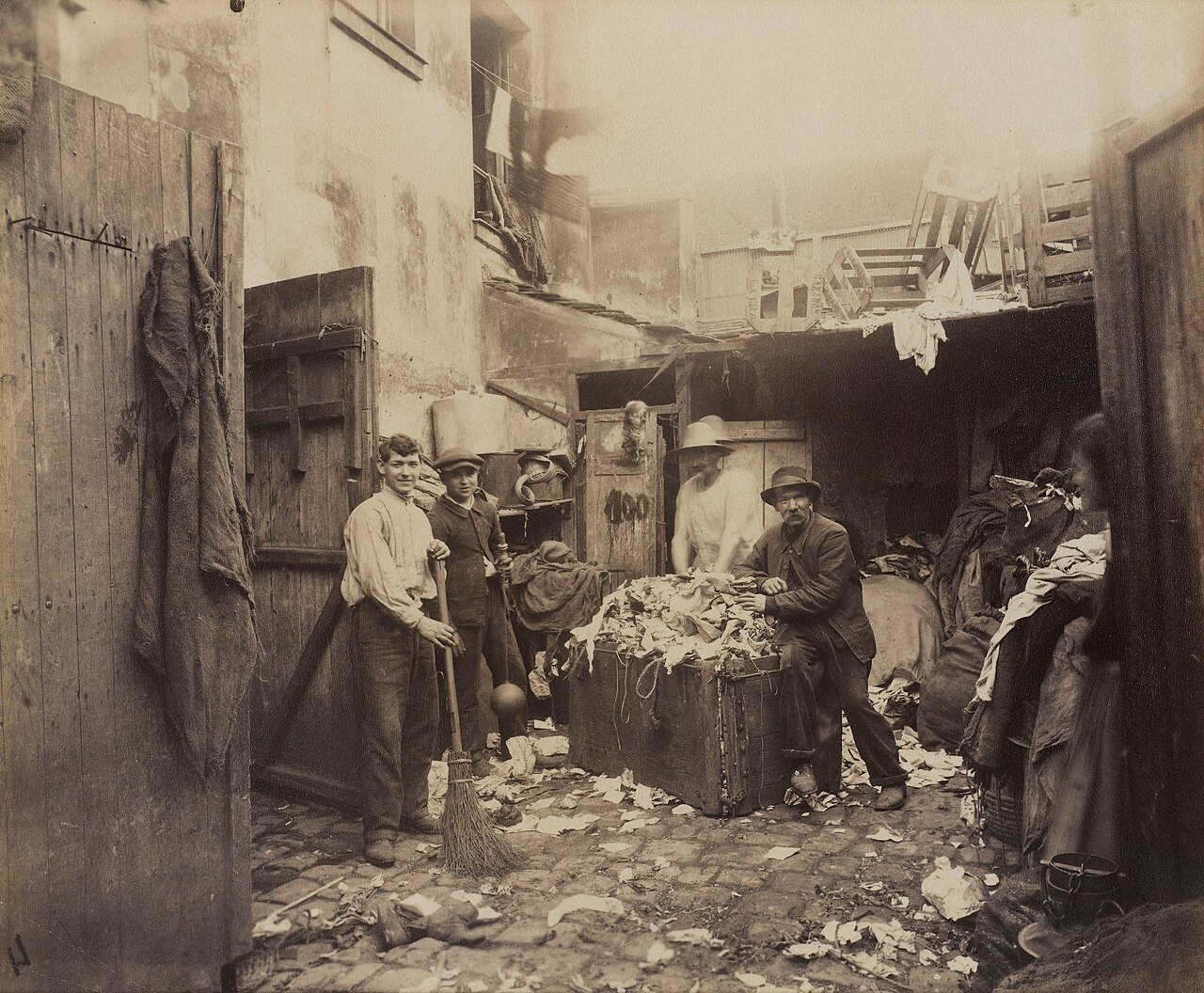
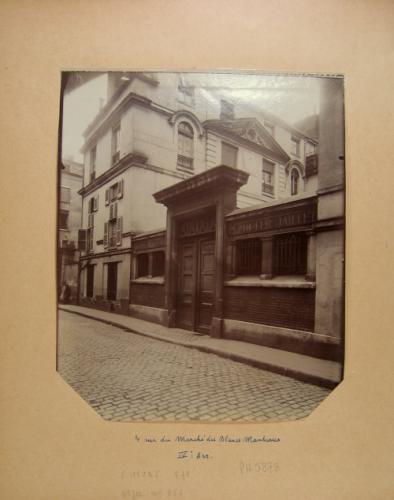
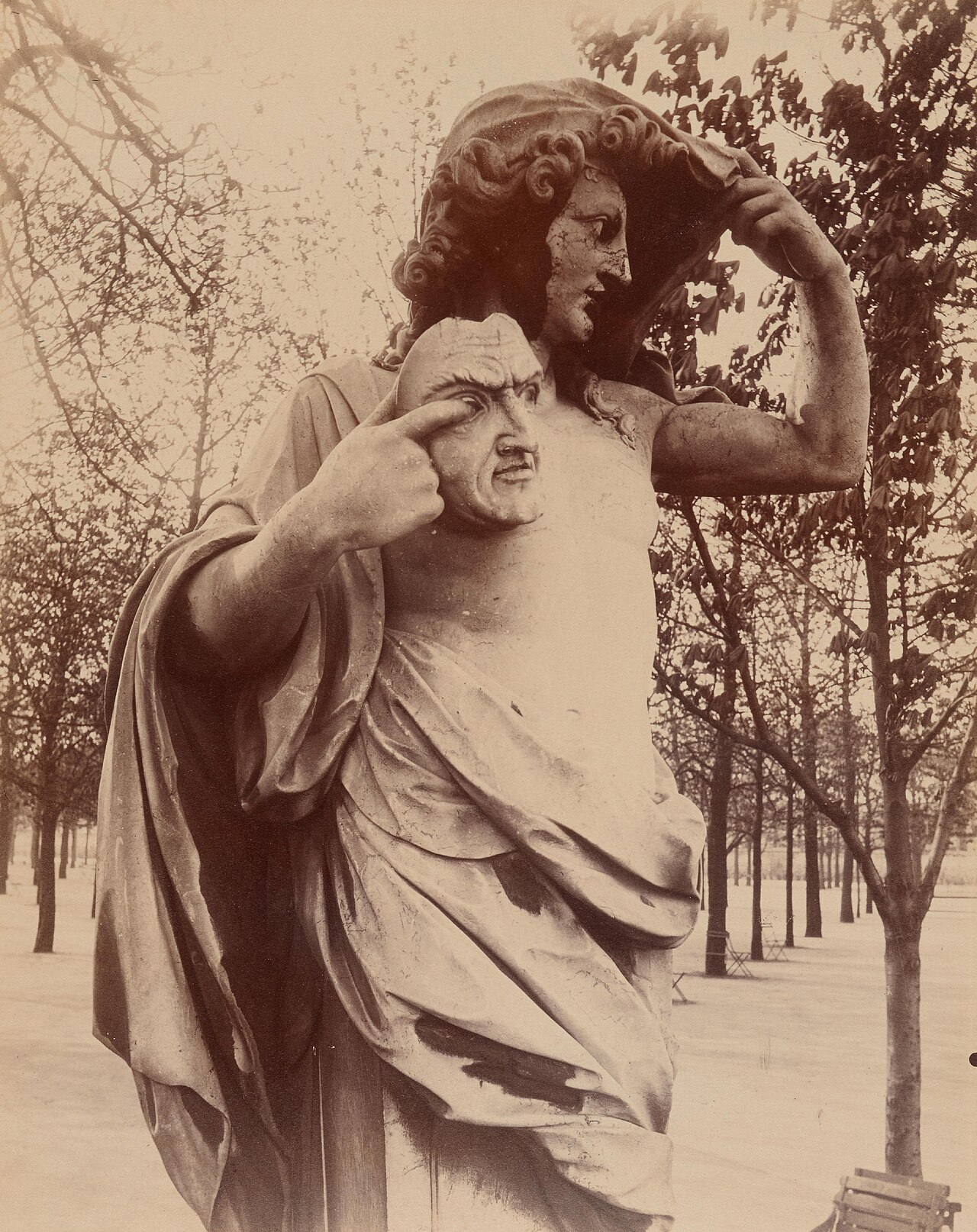
Eugène Atget was a French flâneur and a pioneer of documentary photography, determined to document all of the architecture and street scenes of Paris before their disappearance to modernization. Most of his photographs were first published by Berenice Abbott after his death. Though he sold his work to artists and craftspeople, and became an inspiration for the surrealists, he did not live to see the wide acclaim his work would eventually receive.
- born
- 12 February 1857, Libourne
- died
- 4 August 1927, Paris
- field
- Documentary photography
- nationality
- French
- known_for
- Systematic photographic documentation of Paris architecture and street scenes
Verified Timeline
Lore & Background
Jean-Eugène-Auguste Atget was born 12 February 1857 in Libourne. His father, carriage builder Jean-Eugène Atget, died in 1862, and his mother, Clara-Adeline Atget née Hourlier died shortly after; he was an orphan at age seven. He was brought up by his maternal grandparents in Bordeaux and, after finishing secondary education, joined the merchant navy. He moved to Paris in 1878. He failed the entrance exam for the acting class but was admitted on his second try. Because he was drafted for military service, he could attend class only part-time, and he was expelled from drama school. Still living in Paris, he became an actor with a travelling group, performing in the Paris suburbs and the provinces. He met actress Valentine Delafosse Compagnon, who became his companion until her death in 1926. He gave up acting because of an infection of his vocal cords in 1887, moved to the provinces and took up painting without success. When he was thirty, he made his first photographs, of Amiens and Beauvais, which date from 1888. In 1890, Atget moved back to Paris and became a professional photographer, supplying documents for artists: studies for painters, architects, and stage designers. Starting in 1898, institutions such as the Musée Carnavalet and the Bibliothèque historique de la ville de Paris bought his photographs. The latter commissioned him ca. 1906 to systematically photograph old buildings in Paris. In 1899 he moved to Montparnasse. While still a photographer, Atget also called himself an actor, giving lectures and readings. During World War I Atget temporarily stored his archives in his basement for safekeeping and almost completely gave up photography. Valentine's son Léon was killed at the front. In 1920–21, he sold thousands of his negatives to institutions. Financially independent, he took up photographing the parks of Versailles, Saint-Cloud and Sceaux and produced a series of photographs of prostitutes. Berenice Abbott, while working with Man Ray, visited Atget in 1925, bought some of his photographs, and tried to interest other artists in his work. She continued to promote Atget through various articles, exhibitions, and books, and sold her Atget collection to the Museum of Modern Art in 1968. In 1926, Atget's partner Valentine died, and Atget himself died in Paris on 4 August 1927 — before he ever saw the full-face and profile portraits that Abbott took of him that same year, showing him "slightly stooped...tired, sad, remote, appealing".
Reader's Guide
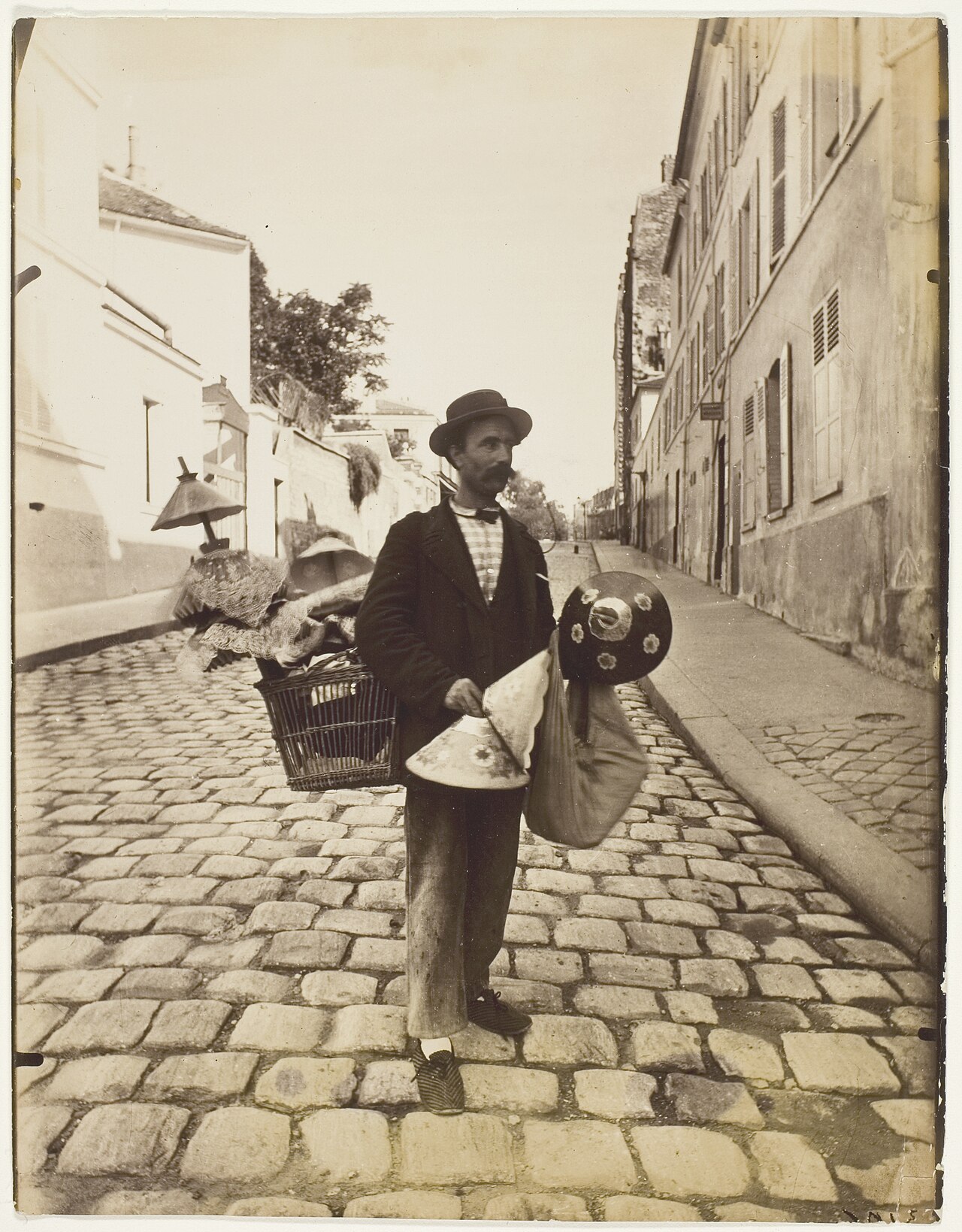
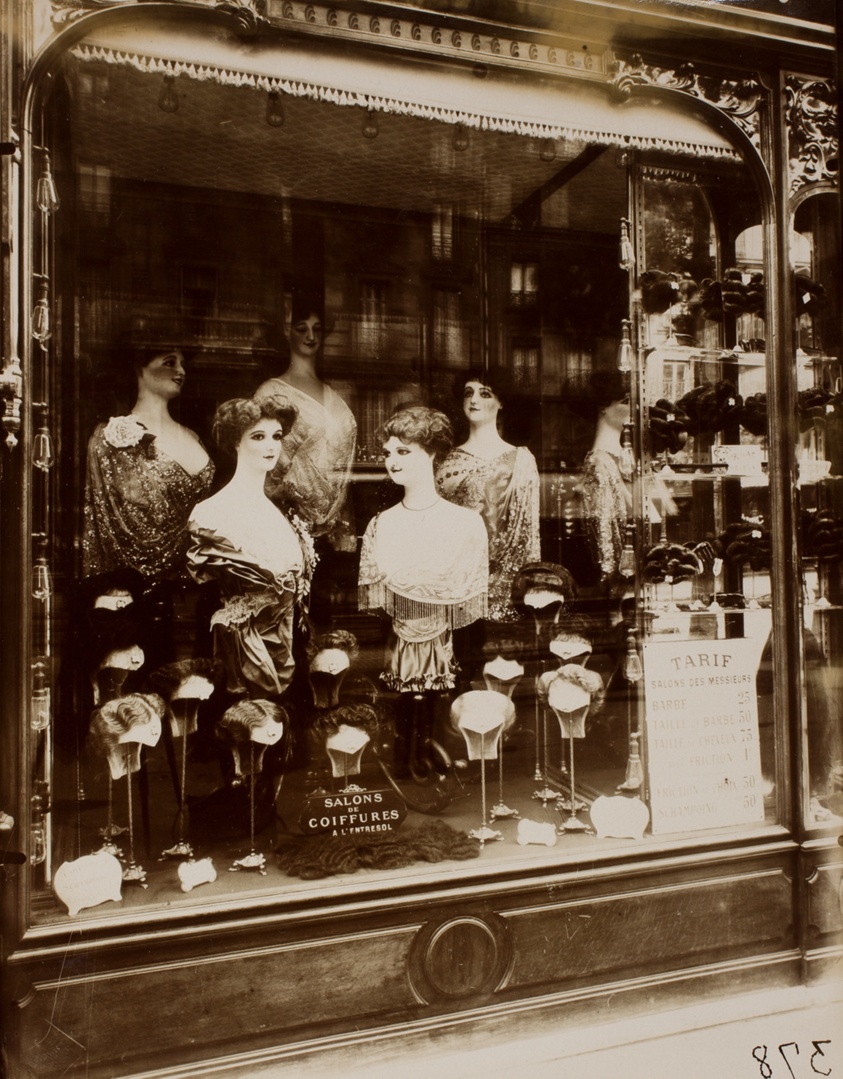
Atget photographed Paris with a large-format wooden bellows camera with a rapid rectilinear lens, an instrument that was still current when he took it up, but which he continued to use even after hand-held, more efficient large-format cameras became available. The optical vignetting often seen at some corners of his photographs is due to his having repositioned the lens relative to the plate on the camera—exploiting one of the features of bellows view cameras as a way to control perspective and keep vertical forms straight. The negatives show four small clear rebates (printing black) where clips held the glass in the plate-holder during exposure. The glass plates were 180×240mm Bande Bleue (Blue Ribbon) brand with a general purpose gelatin-silver emulsion, fairly slow, that necessitated quite long exposures, resulting in the blurring of moving subjects seen in some of his pictures. After taking a photograph, Atget would develop, wash, and fix his negative, then assign it to one of his filing categories, writing the negative number in graphite on the verso and scratching it into the emulsion. He contact-printed his negatives onto pre-sensitized, commercially available printing-out papers; albumen paper, gelatin-silver printing-out paper, or two types of matte albumen paper that he used mainly after WW1. The negative was clamped into a printing frame under glass and against a sheet of albumen photographic printing out paper, which was left out in the sun to expose. Atget did not use an enlarger, and all of his prints are the same size as their negatives. Prints would be numbered and labelled on their backs in pencil, then inserted by the corners into four slits cut in each page of the albums. Additional albums were assembled based on specific themes that might interest his clients, and separately from series or chronology. A central question about Atget's work concerns the nature of his legacy. Some scholars regard him primarily as the author of romantic Parisian views. Others hold that the scale of the archive matters most in assessing his work—the corpus of some 10,000 photographs as a whole, rather than individual images. On this view, his work's significance rests on the arrangement of the images into a sequential series as much as on any single picture. The idea of the corpus as a single work informed the landmark exhibition Maria Morris Hambourg and John Szarkowski prepared at MoMA, an approach also supported by Rosalind Krauss and others.
Did You Know?
- Atget was orphaned at age seven after both his parents died by 1862.
- He failed his first acting class entrance exam but was admitted on his second try, only to be expelled due to military service.
- He gave up acting in 1887 because of an infection of his vocal cords.
- Atget never used an enlarger; all his prints are the same size as their 180×240mm glass negatives.
- Berenice Abbott photographed Atget in 1927, capturing him as 'slightly stooped...tired, sad, remote, appealing'—images he never lived to see.
Documenting a Vanishing City
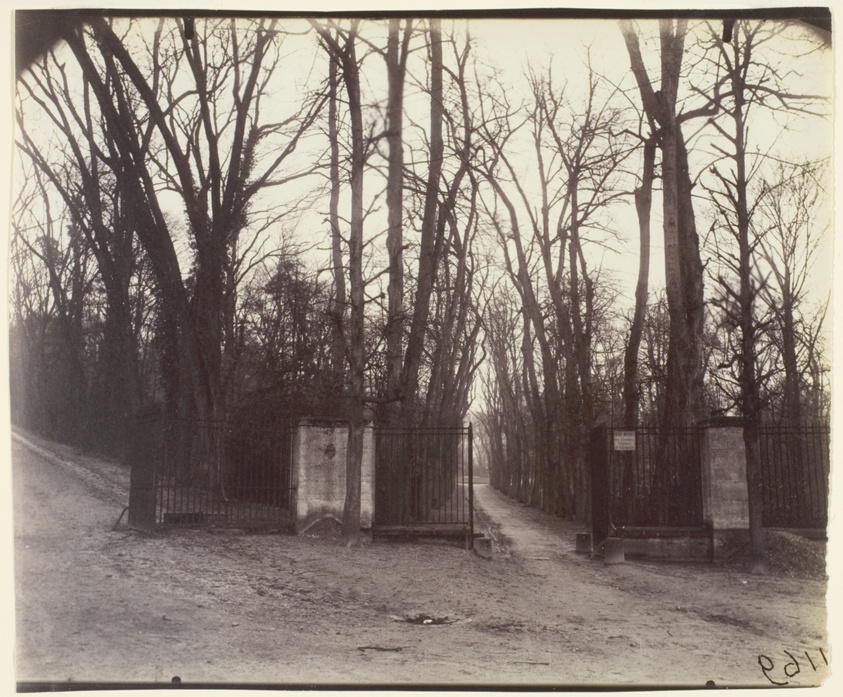
Atget's photographic career was driven by a singular obsession: capturing Paris's architecture and street life before modernization erased it. After returning to the capital in 1890 as a professional photographer, he positioned himself as a supplier of visual references to painters, architects, and stage designers. His work quickly attracted institutional patrons—the Musée Carnavalet and the Bibliothèque historique de la ville de Paris began acquiring his images from 1898 onward, and around 1906 the latter commissioned him to systematically record the city's aging buildings. He worked with a large-format wooden bellows camera, a technology that was already giving way to more portable designs, yet he clung to it throughout his career. The long exposures demanded by his slow gelatin-silver emulsion glass plates inevitably blurred any moving figures, lending his images a quiet, almost spectral stillness. He never used an enlarger; every print was contact-printed at the same size as its negative, then hand-toned with gold and filed into labeled albums organized by theme for his clients.
From Orphan to Actor to Photographer
Jean-Eugène-Auguste Atget's path to the camera was anything but direct. Born in Libourne in 1857, he lost both parents by the age of seven and was raised by his maternal grandparents in Bordeaux. After secondary education, he briefly joined the merchant navy before moving to Paris in 1878 to pursue acting. He failed his first entrance exam for a drama class but was admitted on the second attempt, only to be expelled when military conscription limited his attendance. He found his footing with a travelling theatre troupe, performing in Parisian suburbs and provincial towns, and met the actress Valentine Delafosse Compagnon, who would remain his companion until her death in 1926. A vocal-cord infection forced him to abandon the stage in 1887. He drifted into painting without success, and it was not until he was thirty, in 1888, that he picked up a camera for the first time, photographing the cities of Amiens and Beauvais.
The Woman Who Rescued His Legacy
Atget died in Paris on 4 August 1927, never having witnessed the broad recognition his body of work would eventually command. The architect of that posthumous fame was Berenice Abbott, who first visited him in 1925 while working alongside Man Ray. She purchased a selection of his photographs and set about cultivating interest among other artists. Over the following years she championed his work through articles, exhibitions, and published books, steadily building his reputation in the art world. In 1968, she sold her personal Atget collection to the Museum of Modern Art, cementing his place in the photographic canon. Most of his images had been first published only after his death, largely through Abbott's efforts. He had also become a quiet inspiration for the surrealist movement during his lifetime, though this recognition remained narrow. Abbott even photographed Atget's face in 1927—full-face and profile portraits capturing him as "slightly stooped…tired, sad, remote, appealing"—images he never lived to see.
The Myth of the Starving Artist
A persistent narrative surrounds Atget: that of the impoverished, romantic figure who labored in obscurity while the world ignored him. Yet the documentary record complicates this picture. John Szarkowski pointed to a fragment of Atget's correspondence with Paul Léon, a professor at the Collège de France and senior official in the French Ministry of Culture, revealing that Atget sold 2,600 negatives for 10,000 francs—one of his largest lifetime transactions, though not his only one. In 1920–21 he sold thousands more negatives to institutions, achieving a degree of financial independence that allowed him to pursue personal projects, including photographic series of the parks at Versailles, Saint-Cloud, and Sceaux, as well as a set of images of prostitutes. Some researchers now argue that the poverty narrative was constructed after his death to fit a romantic artist archetype. Still, reliable biographical details remain scarce, and much of what is known about his inner life and daily circumstances is, as the sources acknowledge, uncertain.
Gallery
Frequently Asked Questions
Who is Eugène Atget?
He was a French photographer and flâneur widely regarded as a pioneer of documentary photography. His life's project was to systematically record the architecture and street life of Paris before modernization erased it.
What is Eugène Atget known for photographing?
He devoted his career to capturing Paris's buildings, streetscapes, and urban details as a visual archive of a city in the process of disappearing. His images were sold primarily to artists and craftspeople who valued them as references.
When and where was Eugène Atget born, and when did he die?
Atget was born on 12 February 1857 in Libourne, France, and died in Paris on 4 August 1927. He spent the bulk of his working life wandering and photographing the French capital.
Did Eugène Atget achieve widespread fame during his lifetime?
He inspired the Surrealists and sold work to artists, yet broad public acclaim largely postdated his death. It is worth noting, however, that a first major publication of his photographs did appear before he passed away.
Why is Eugène Atget considered important in photography history?
He treated photography as a methodical, almost archival documentation of a city's visual heritage rather than as a purely artistic gesture. His tireless effort to preserve Paris's vanishing streetscapes made his body of work a foundational reference for both documentary and fine-art photography.
More in Photographers 1-24
Elsewhere in the Photographers universe
Spotted an error? Know more?
This is a living reference — every entry is fact-audited, and reader corrections feed straight into our audit queue. Suggest an edit · See this site's audit record