Edward Steichen
Luxembourgish American photographer who pioneered modern fashion photography.

via Wikipedia: Edward Steichen · see source
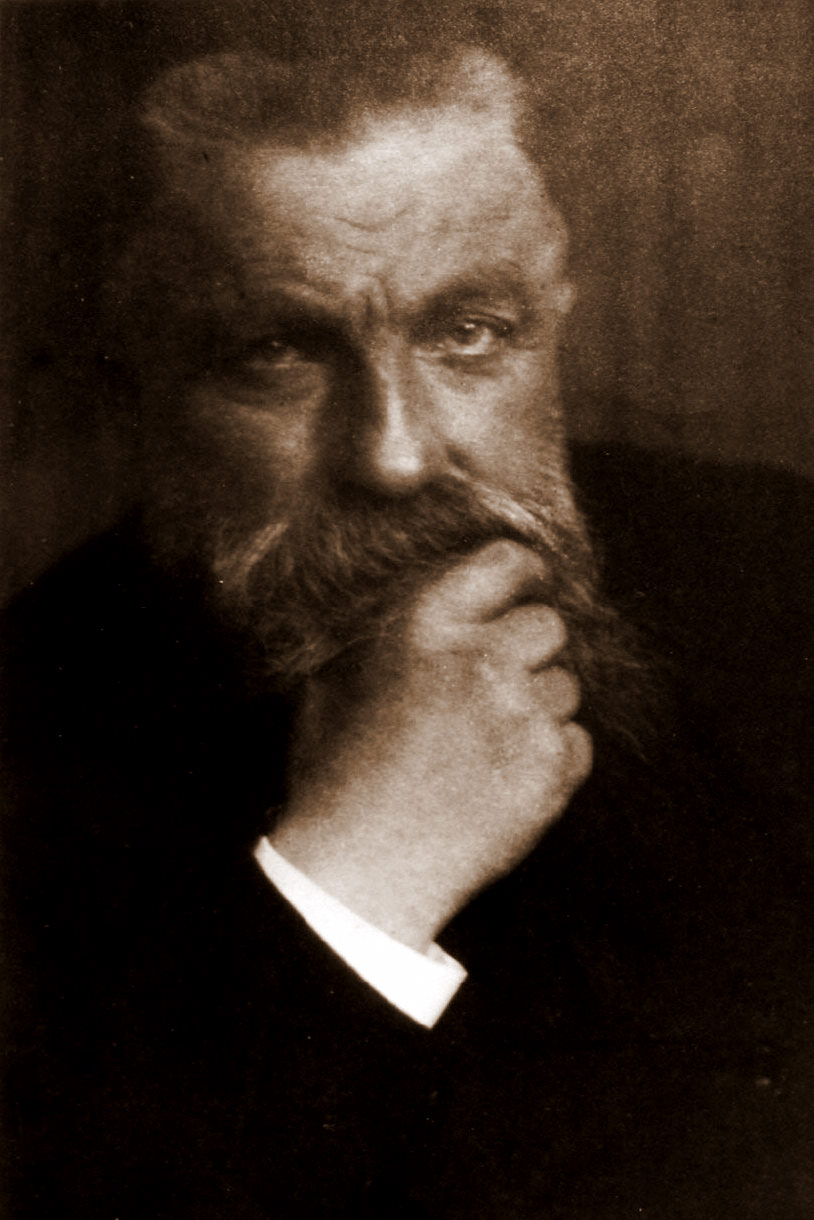
Edward Jean Steichen was a Luxembourgish American photographer, painter, and curator who became a pioneer of fashion photography. His 1911 gown images for the magazine Art et Décoration were the first modern fashion photographs to be published. From 1923 to 1938, he served as chief photographer for the Condé Nast magazines Vogue and Vanity Fair, designating him the "greatest living portrait photographer" even as he turned to painting. He worked for many advertising agencies, including J. Walter Thompson, and was regarded as the most popular and highest-paid photographer in the world. From 1947 to 1961, he served as Director of the Department of Photography at New York's Museum of Modern Art, where he curated the touring exhibition The Family of Man, seen by nine million people.
- known_for
- Pioneering fashion photography; directing The Family of Man exhibition; serving
Verified Timeline
Lore & Background
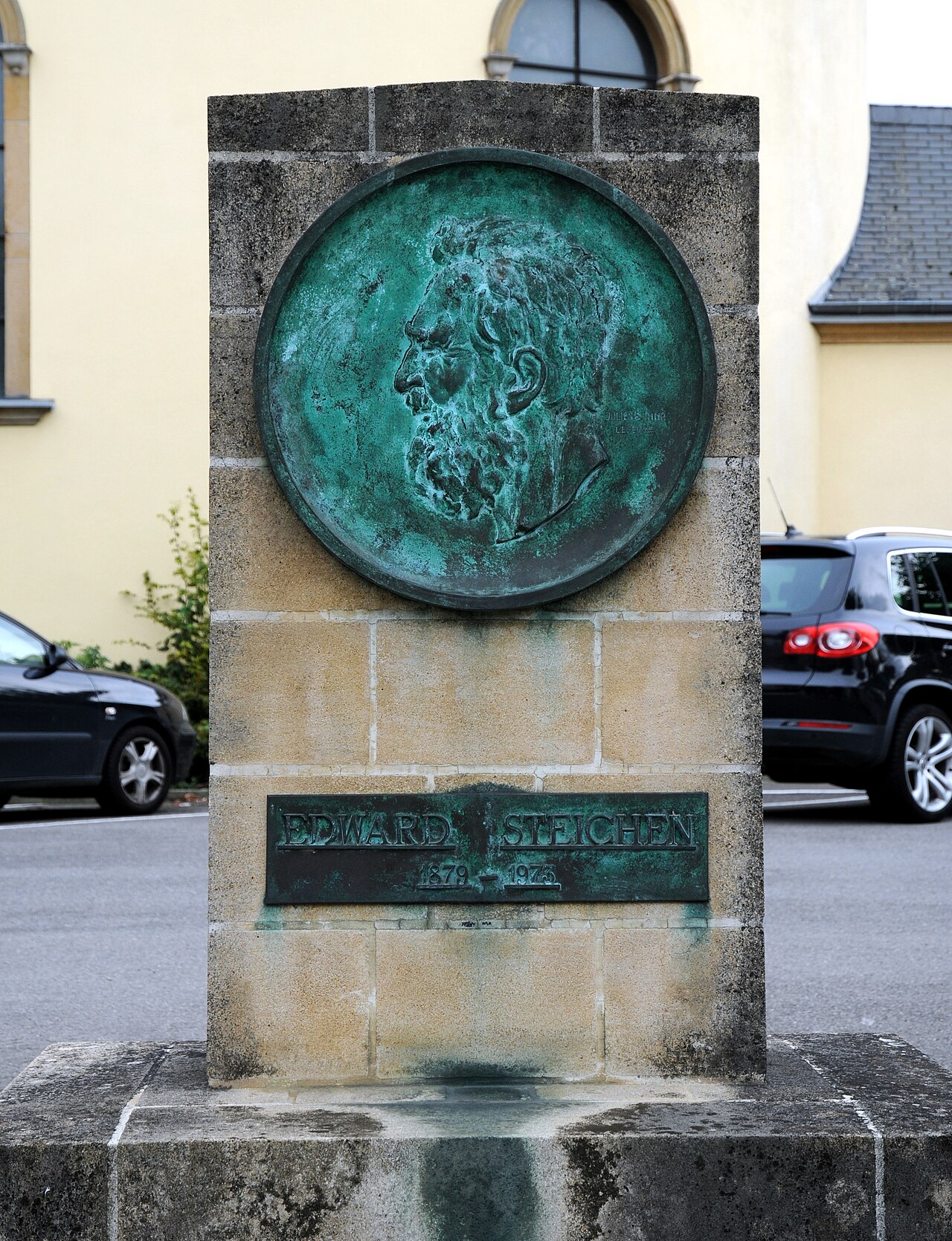
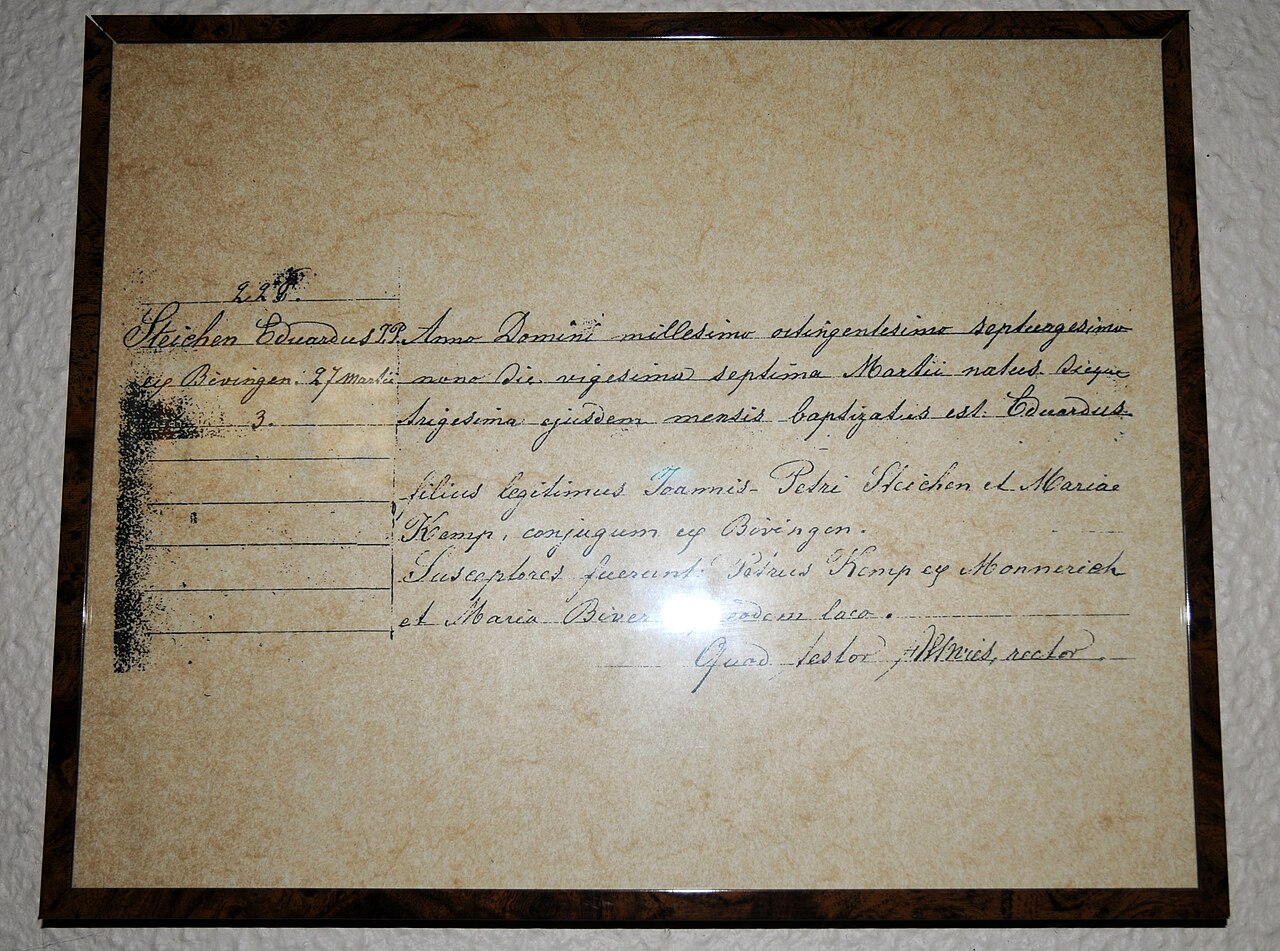
Steichen was born Éduard Jean Steichen on March 27, 1879, in Bivange, Luxembourg, and emigrated to the United States at eighteen months old. He began a four-year lithography apprenticeship with the American Fine Art Company of Milwaukee in 1894, and bought his first camera, a secondhand Kodak box "detective" camera, in 1895. In 1900, he met Alfred Stieglitz in New York City, who bought three of his photographic prints. Steichen designed the logo for Stieglitz's magazine Camera Work with a custom typeface and was the most frequently shown photographer in the journal. In 1905, Stieglitz and Steichen created the Little Galleries of the Photo-Secession, known as 291 Gallery, presenting some of the first American exhibitions of Auguste Rodin, Henri Matisse, Paul Cézanne, Pablo Picasso, and Constantin Brâncuși. Steichen began experimenting with color photography in 1904 and was one of the earliest in the United States to use the Autochrome Lumière process.
Reader's Guide
Steichen's significance lies in his role as a bridge between fine art and commercial photography. His 1911 fashion photographs for Art et Décoration, taken of gowns designed by Paul Poiret, were the first serious fashion photographs ever made, according to his 1963 autobiography. As chief photographer for Vogue and Vanity Fair from 1923 to 1938, he was hired by Condé Nast for the extraordinary salary of $35,000. During World War II, he served as Director of the Naval Aviation Photographic Unit and directed the war documentary The Fighting Lady, which won the Academy Award for Best Documentary Feature at the 17th Academy Awards. His curatorial work at MoMA, especially The Family of Man exhibition, reached nine million viewers and was added to UNESCO's Memory of the World Register in 2003. His photographs have achieved record auction prices, including The Pond–Moonlight (1904) selling for US$2.9 million in 2006 and The Flatiron (1904) for $12,000,000 in 2022.
Did You Know?
- Steichen's 1911 gown images for Art et Décoration were the first modern fashion photographs to be published.
- He was hired by Condé Nast in 1923 for the extraordinary salary of $35,000 (equivalent to over $500,000 in 2019 value).
- In 1904, Steichen began experimenting with color photography and was one of the earliest in the United States to use the Autochrome Lumière process.
- The war documentary The Fighting Lady, directed by Steichen, won the Academy Award for Best Documentary Feature at the 17th Academy Awards.
- A print of The Flatiron (1904) sold for $12,000,000 at Christie's New York on November 8, 2022, well above the original estimate of $2,000,000-$3,000,000.
Roots in Luxembourg, Wings in Milwaukee
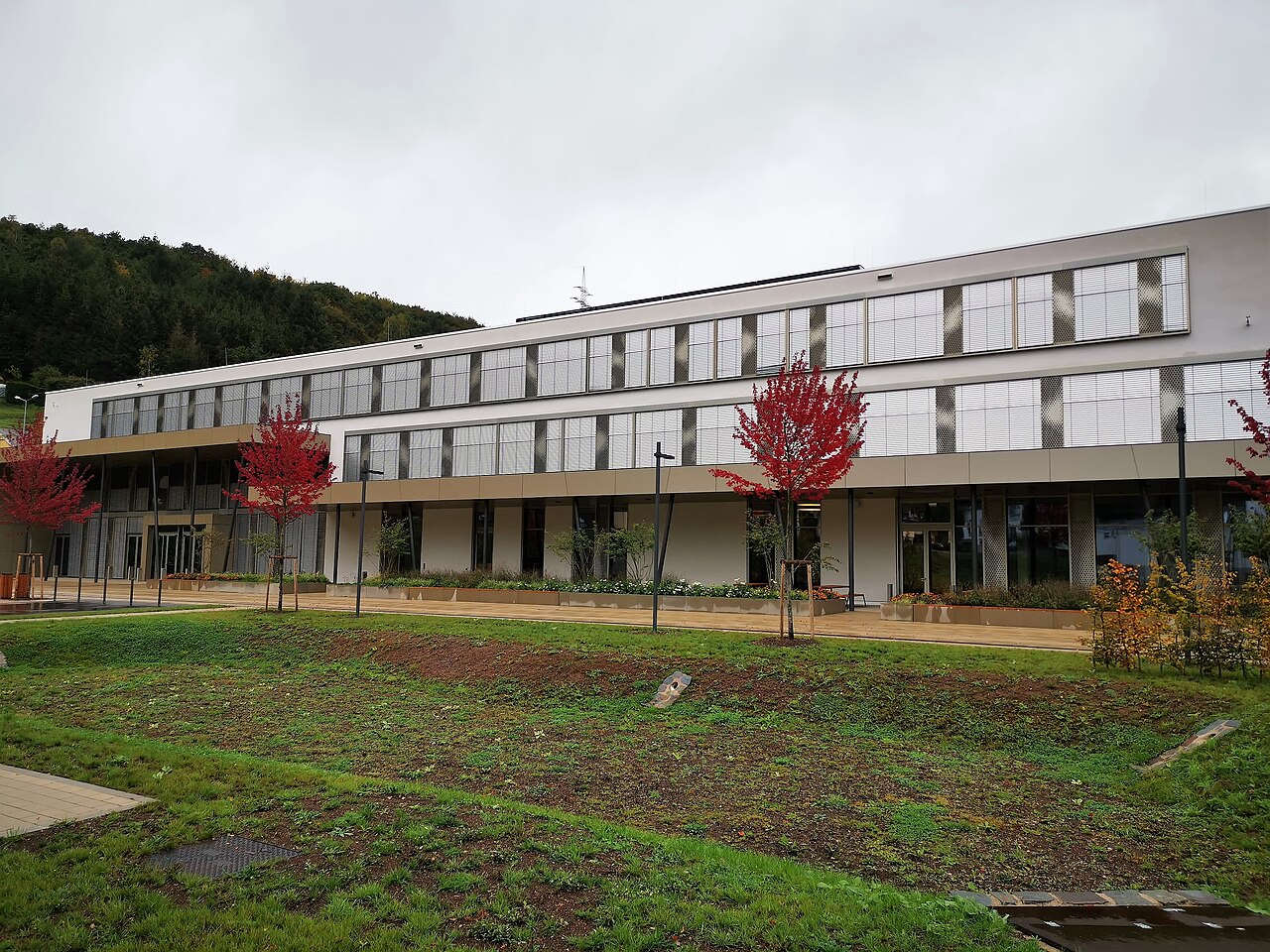
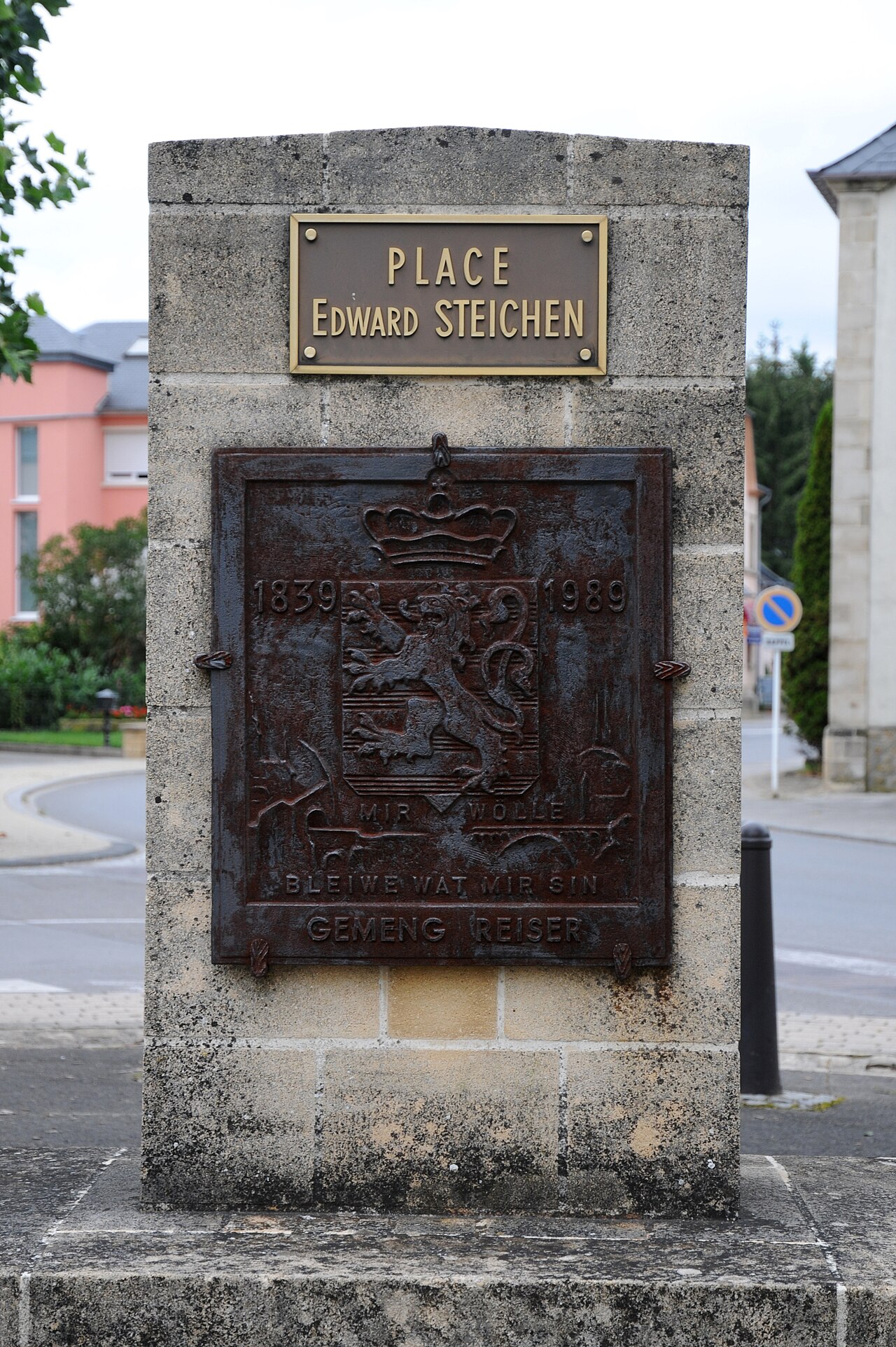
Éduard Jean Steichen was born on March 27, 1879, in the small Luxembourgish village of Bivange. His parents, Jean-Pierre and Marie Kemp Steichen, faced increasingly straitened circumstances and financial difficulties, and decided to make a new start, emigrating to the United States when Steichen was eighteen months old. According to biographer Penelope Niven, the Steichens were "part of a large exodus of Luxembourgers displaced in the late nineteenth century by worsening economic conditions." Jean-Pierre Steichen immigrated in 1880, with Marie bringing the infant Éduard after Jean-Pierre had settled in Hancock in Michigan's Upper Peninsula copper country. A sister, Lilian Steichen, was born in Hancock on May 1, 1883; she would later marry poet Carl Sandburg, whom she met at the Milwaukee Social Democratic Party office in 1907. By 1889, when Éduard was 10, his parents had saved enough to move the family to Milwaukee, Wisconsin. There he learned German and English at school, while continuing to speak Luxembourgish at home. In 1894, at fifteen, he began attending Pio Nono College, a Catholic boys' high school, where his artistic talents were noticed. He quit high school to begin a four-year lithography apprenticeship with the American Fine Art Company of Milwaukee. After hours, he would sketch and draw, and began to teach himself painting. Having discovered a camera shop near his work, he persuaded himself to buy his first camera, a secondhand Kodak box "detective" camera, in 1895. Steichen and his friends pooled their funds, rented a small room in a Milwaukee office building, and began calling themselves the Milwaukee Art Students League. In 1899, his photographs were exhibited in the second Philadelphia Photographic Salon. Steichen became a U.S. citizen in 1900 and signed the naturalization papers as Edward J. Steichen.
Fashion, Fame, and the Blurring of Art
Steichen's 1911 gown images for the magazine Art et Décoration were the first modern fashion photographs to be published. From 1923 to 1938 he served as chief photographer for Condé Nast's Vogue and Vanity Fair, designating him the "greatest living portrait photographer" even as he turned to painting. He worked for many advertising agencies, including J. Walter Thompson, and was regarded as the most popular and highest-paid photographer in the world. In 1902, when Stieglitz was formulating Camera Work, he asked Steichen to design the logo for the magazine with a custom typeface. Steichen was the most frequently shown photographer in the journal. In Camera Work, Steichen pushed for a democratic approach, responding to critics who accused him of manipulating photographs by claiming that all photographers were frackers and "upended the myth of an 'objective' photography faithful to nature." He claimed, "There is never anything natural in photography … every shot, every print, is already a manipulation that introduces a gap between the photograph and its supposed truth." In 1905, Stieglitz and Steichen created the Little Galleries of the Photo-Secession, in what had been Steichen's portrait studio; it eventually became known as the 291 Gallery after its address. It presented some of the first American exhibitions of Auguste Rodin, Henri Matisse, Paul Cézanne, Pablo Picasso, and Constantin Brâncuși. According to author and art historian William A. Ewing, Steichen became one of the earliest "jet setters," constantly moving back and forth between Europe and the U.S. by steamship, cross-pollinating art from Europe to the United States, helping to define photography as an art form.
War, Museum, and a Family of Humanity
After the United States' entry into World War II, Steichen was invited by the United States Navy to serve as Director of the Naval Aviation Photographic Unit. He was commissioned a Lieutenant-Commander in January 1942. Steichen selected for his unit six officer-photographers from the industry, including photographers Wayne Miller and Charles Fenno Jacobs. In 1944, he directed the war documentary The Fighting Lady, which won the Academy Award for Best Documentary Feature at the 17th Academy Awards. From 1947 to 1961, Steichen served as Director of the Department of Photography at New York's Museum of Modern Art. While there, he curated and assembled exhibits including the touring exhibition The Family of Man, which was seen by nine million people. In 2003, the Family of Man photographic collection was added to UNESCO's Memory of the World Register in recognition of its historical value. In 1942, Steichen curated for the Museum of Modern Art the exhibition Road to Victory, five duplicates of which toured the world.
Auction Records and Lasting Legacy
In February 2006, a print of Steichen's early pictorialist photograph, The Pond–Moonlight (1904), sold for US$2.9 million—at the time, the highest price ever paid for a photograph at auction. A print of another photograph of the same style, The Flatiron (1904), became the second most expensive photograph ever on November 8, 2022, when it was sold for $12,000,000 at Christie's New York – well above the original estimate of $2,000,000-$3,000,000. These record-breaking sales reflect a broader recognition of Steichen's role in elevating photography from a technical craft to a respected fine art. His pioneering fashion images, his landmark exhibitions, his wartime documentary, and his decades of curatorial work at MoMA collectively shaped how twentieth-century audiences saw both the medium and the world it captured.
Gallery
Frequently Asked Questions
Who is Edward Steichen?
Edward Jean Steichen was a Luxembourg-born American photographer, painter, and curator who helped define modern visual culture in the 20th century. He is most often remembered as a pioneer of fashion photography and a towering figure in the art world.
What is Edward Steichen most famous for?
His 1911 gown photographs for Art et Décoration are widely cited as the first true modern fashion images, and he went on to shape the look of Vogue and Vanity Fair as their chief photographer from 1923 to 1938. He is also celebrated for curating the landmark exhibition The Family of Man.
What role did Steichen play at the Museum of Modern Art?
He led MoMA's Department of Photography from 1947 until 1961, a tenure in which he was instrumental in elevating photography to the status of a fine art within the museum context.
What is The Family of Man and why do fans still talk about it?
It was a 1955 exhibition Steichen curated that wove together photographs of everyday human life from around the world into one large-scale narrative. The show traveled internationally and is still regarded as one of the most ambitious photography exhibitions ever assembled.
Did Edward Steichen ever work in film or documentary?
Yes; he served as a visual consultant on the 1944 wartime documentary The Fighting Lady, bringing his eye for composition and narrative to moving-image storytelling during World War II.
More in Photographers 1-24
Elsewhere in the Photographers universe
Spotted an error? Know more?
This is a living reference — every entry is fact-audited, and reader corrections feed straight into our audit queue. Suggest an edit · See this site's audit record